Sunday, December 7, 2025

Why Global Collaboration Matters : Lessons Pakistan Can Teach the World About HIV Outbreak Response

Why Global Collaboration Matters : Lessons Pakistan Can Teach the World About HIV Outbreak Response

By: Mahwish Arif

Pakistan’s experience highlights how the world can better respond to an ongoing,
rapid expansion of HIV by building on shared resources, community engagement
and leadership.
Pakistan is noted for its rapid increase in new HIV cases. However, through the
collective efforts of the local community, international partners and local
leadership, the combined efforts of the local community, international partners
and local leadership have shown how they can contain and manage a crisis while
building a resilient health system for HIV.
The importance of early detection of HIV was highlighted in several of Pakistan’s
outbreaks, especially in the district of Ratodero in Sindh. Local authorities were
overwhelmed with the number of new cases and the lack of adequate HIV testing
facilities. However, through the quick response from their international partners
(including WHO, UNAIDS and the Global Fund), local authorities received a rapid
supply of HIV test kits, diagnostic equipment, technical assistance and support.
Through these efforts, thousands of individuals were screened for HIV in a short
time period and millions of HIV-positive individuals were identified who otherwise
would have remained undiagnosed. As well, this provides the best example of
how successful a nation can be when they receive help from global partners, who
have shared their resources, tools, expertise and funding to enable the local
health systems to respond quickly and effectively to the need for early detection
of HIV.
Pakistan’s Experience with Community Awareness Campaigns
The history of HIV outbreaks has shown Pakistan that awareness campaigns must
be culturally sensitive to the communities they target. There was much stigma
surrounding HIV in Pakistani society; therefore, silence can allow the virus to
spread faster than actual physical infection. In Pakistan, public education was
delivered most effectively by teachers, NGOs, social workers, and religious leaders
who understood local perceptions and fears around the disease.
Both the successes and failures of recovery campaigns in Pakistan have
emphasised the importance of adapting awareness campaigns to the local culture
instead of taking them from countries with different attitudes and beliefs about
HIV. Each individual country can adapt their awareness campaigns based on their
own cultural sensitivities while at the same time providing accurate and timely
information.

One of the primary drivers for transmitting HIV within Pakistan’s population is due
to the increased usage of unregulated and informal healthcare providers. Unsafe
practices during injections and a lack of sterilisation resulted in several outbreaks
(especially in rural areas). Within Pakistan, there have been efforts made by
government officials, local health workers and other stakeholders to provide
more regulatory oversight to informal healthcare providers, develop capabilities
through training, and provide stricter guidelines regarding the appropriate usage
of syringes.
This experience is relevant around the world as many developing nations depend
on informal health care systems. Pakistan’s experiences illustrate that rather than
trying to eliminate these providers, we can incorporate them into formal health
care systems by offering training and supervision, helping to greatly reduce the
transmission of infection.

Save Lives Through Collaboration at a Global and Local Level
The example of Pakistan illustrates how much potential exists to mount robust
efforts against public health crises by combining international resources and
knowledge with local resources and action. Global agencies provided knowledge
and technical assistance through testing supplies and selling products, while local
health care providers, community leaders, and volunteers performed screenings,
community awareness campaigns, and patient support.

The lessons learned through challenges faced by Pakistan, and solutions found,
are meaningful for the global community. It is clear from Pakistan’s response that
there are many areas from improving early detection of illness to improving
informal health care systems and the need to create culturally appropriate
awareness campaigns where global entities need to work together and provide
input at the highest levels of collaboration will help fewer countries contain
outbreaks and protect their most vulnerable.

Poverty Is Fueling HIV in Pakistan — And the World Needs to Pay Attention

Poverty Is Fueling HIV in Pakistan — And the World Needs to Pay Attention

By : Mahwish Arif, Journalist


The HIV epidemic that Pakistan is currently facing is being portrayed as a failed
medical crisis; however, really it is a product of an ongoing poverty crisis in the
country. The majority of the cases are occurring among those people who cannot
afford access to health care, those who do not know that they need to access it,
and those who have limited knowledge about safe medical practices. In many
places in Pakistan, especially among impoverished populations, poverty
contributes to poor health outcomes and creates an environment whereby the
transmission of HIV is easier to occur.

For families who reside in rural and slum communities and who are living in
poverty, getting to a certified medical doctor can be unaffordable. Families living
in remote locations might find certified doctors located at the nearest hospital,
which could be hours away. For those families who do find a nearby hospital,
many do not have the money to pay for private hospitals, and with both public
sector health care facilities in densely populated areas (where health facilities are
located) and public health centers overcrowded and poorly equipped; millions go
to informal and/or “street doctors”, where services are provided at a low cost and
often with unsafe practices. The risks to health occur as a result of using reused
syringes, utilizing contaminated equipment, and receiving unscreened blood
transfusions at these sites. Families might save money when they obtain health
services from unregulated practitioners; however, they pay for those savings with
their health.

Examples of the impact of this situation can be seen in Taunsa, Punjab and
Ratodero, Sindh. Both areas have seen outbreaks of HIV among many children,
many of whom were under the age of 5. These children contracted HIV after
receiving treatment for minor illnesses through local unlicensed practitioners. The
parents of these children relied on their local practitioners to provide essential
health services to their children because they were the only affordable option
available. These local practitioners have been unknowingly enabling the infection
of children in both areas.

The HIV epidemic in Pakistan continues to grow due to various causes related to
poverty. Many families do not have enough money to pay for medical care,
therefore they often resort to unsafe alternatives. There is a high rate of
unnecessary injections in the country, and in many parts of the country, these are
given with reused syringes. Many people do not understand how HIV is
transmitted, nor do they know what to look for when they are at a medical
facility. The stigma associated with HIV often makes people reluctant to seek
testing or treatment, particularly if they fear what their community may think of
them. Most treatment centers for HIV are located in urban areas so rural families
often have no way to get to these centers because they cannot afford to travel
there.

Although there is an increasing number of infections from HIV in Pakistan, the
global response to this epidemic has been minimal. The HIV epidemic in Pakistan
does not fit within the accepted model of HIV; it is a product of social and
economic factors, and the healthcare system does not protect the poorest
members of society.
To stop the HIV epidemic in Pakistan, improved access to safe and effective
healthcare, increased regulation of clinics, improved awareness of HIV
transmission, and reduced stigma need to be put into place. The HIV epidemic is
more than just a public health crisis; it is a crisis of social and economic injustice,
and as long as there are social and economic injustices in Pakistan, the HIV
epidemic will continue.

Electric Bus Revolution in Punjab Under Maryam Nawaz’s Leadership

Electric Bus Revolution in Punjab Under Maryam Nawaz’s Leadership

By Malik Rizwan Awan

The launch of electric buses under the leadership of Chief Minister Punjab Maryam Nawaz in Punjab marks a historic moment! Starting in Lahore with 380 electric buses, this project not only makes commuting easier for the public but also takes a major step toward environmental protection.

The initiative is not limited to Lahore alone. Cities including Gujranwala, Sialkot, Sheikhupura, Gujrat, Rahim Yar Khan, Dera Ghazi Khan, Faisalabad, Sargodha, Mianwali, and Wazeerabad now also benefit from electric bus services. In total, the project comprises nearly 1,500 buses, serving people across the province with modern, convenient transport.

Through this project, Maryam Nawaz has demonstrated that public convenience and environmental sustainability can go hand in hand. Affordable, safe, and modern transportation is now making daily life easier for the people.

This initiative is a gift for the people of Punjab, improving everyday travel while sending a positive message about provincial development and environmental conservation. Under Maryam Nawaz’s leadership, this success represents a bright step toward transforming the lives of the citizens.

$500 million deal, an economic diversification in USA-Pak ties

$500 million deal, an economic diversification in USA-Pak ties

By Maham Tahir

Pakistan and the United States has recently entered into $500 million deal that is to expand cooperation in critical minerals sector.

The agreement to this effect , between Missouri-based U.S. Strategic Metals (USSM) and Pakistan’s Frontier Works Organization (FWO), envisages immediate exports of ores (antimony, copper, gold, tungsten and rare earth elements) and the potential development of a polymetallic refinery in Pakistan, the Prime Minister’s Office said.

A separate MoU between the National Logistics Corporation (NLC) and Mota-Engil aims to improve transport links for mining supply chains.
US Chargé d’Affaires Natalie Baker called the signing “an example of the strength of the US–Pakistan bilateral relationship” and highlighted Washington’s interest in “critical resources vital for security and prosperity.”

The Embassy’s statement noted the delegation’s meetings at the Prime Minister’s House for the signing.
Officials in Islamabad say early ore shipments could provide quicker foreign exchange inflows while longer-lead investments, such as the proposed refinery, progress through studies and approvals.

The PMO said the USSM delegation was briefed on Pakistan’s “vast mineral reserves, including copper, gold and rare earth elements.” Analysts caution that an MoU is preliminary; feasibility work, environmental clearances, permits and financing must follow before any binding investment.

The strategic context is notable. Pakistan has long relied on Chinese investment in large mining and infrastructure schemes under the China-Pakistan Economic Corridor. The entry of a US firm alongside a European logistics partner diversifies external participation rather than displacing existing ties, a balance Islamabad will need to manage amid US-China supply-chain competition.

Delivery risks are material. Pakistan’s mining sector has faced criticism over opaque contracts and protracted disputes, with projects such as Reko Diq delayed for years over ownership and fiscal terms. Analysts argue that transparent contract disclosure and anti-corruption safeguards are essential to avoid legal or political setbacks that can deter long-term investors.

Western sponsors also face shareholder scrutiny on environmental, social and governance standards; credible frameworks on emissions, water use and community impact will be needed to anchor durable capital. Many deposits lie in Balochistan, where community grievances and security concerns require benefit-sharing and reliable protection to keep projects on track.

Global market conditions will matter. Demand for critical minerals is rising with electric vehicles and renewable energy, but price cycles remain volatile, and investors have options in Africa and Latin America. Pakistan will need regulatory clarity, predictable fiscal terms and on-time infrastructure to stay competitive. In this respect, the NLC-Mota-Engil MoU acknowledges gaps in transport and power/water provision that can become bottlenecks for mine-to-port corridors if not addressed early.

For scale, the headline US$500 million compares with Pakistan’s recent annual FDI inflows typically measured in the low billions, underscoring the potential relevance if the MoU translates into funded projects.

The near-term test will be whether ore shipments begin and concrete steps-site selection, environmental studies, permits and financing—move forward in coming months.


If Islamabad can convert this framework into binding agreements while maintaining balance between Chinese and Western partners, strengthen transparency, and meet ESG and security expectations in Balochistan, the deal could lift export value-addition and improve foreign-exchange resilience.

If these pieces do not align, the MoU risks remaining a symbolic gesture rather than a pivot in Pakistan’s minerals strategy.

PM Sharif’s Beijing Trip seen as Catalyst for CPEC Phase II

PM Sharif’s Beijing Trip seen as Catalyst for CPEC Phase II

By Maham Tahir

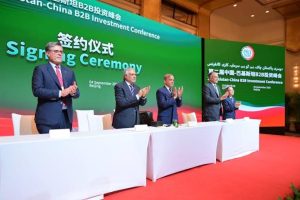
Prime Minister Shehbaz Sharif has wrapped up a six-day visit to China that both sides billed as a reset for economic cooperation, with 21 MoUs and joint ventures worth about $8.5 billion signed in Beijing across agriculture, renewables, EVs, health, steel and other sectors.

Officials told this correspondent that the agreements mark the formal launch of “CPEC 2.0”, shifting focus from roads and power to industry, technology and export

At talks with Premier Li Qiang, the two governments reaffirmed work on the second phase of CPEC, with an emphasis on special economic zones (SEZs), IT, agriculture, mining and industry. Mr Sharif described his meeting as “warm and most productive”, and invited Chinese firms to expand their investment footprint in Pakistan.

He also pressed for early implementation of the ML-1 rail upgrade, Karakoram Highway realignment and Gwadar’s operationalisation.

According to official readouts and wire reports, the Beijing business conference produced $7 billion in MoUs and $1.5 billion in joint ventures, part of a broader effort to accelerate industrialisation and revive bilateral trade.

The government also highlighted business-to-business engagement, noting “more than 300 Pakistani and 500 Chinese companies” attended the conference.

Key sectors poised to benefit

Industrial zones & manufacturing: The emphasis on SEZs (notably Rashakai and Dhabeji) aligns with CPEC Phase II’s factory-led model, with Pakistani officials courting textiles, electronics and agro-processing investors to deepen supply chains and expand exports.

Agriculture & food processing: Joint work on seed technology, irrigation and SPS cooperation aims to lift farm productivity and open market access in China for higher-value Pakistani produce.

Technology & green economy: MoUs covering IT and renewables support Pakistan’s push to raise the share of clean energy and build digital services exports as part of the “CPEC 2.0” pillars.
The ML-1 Test and Domestic Hurdles

The Karachi–Peshawar ML-1 railway remains the flagship test of CPEC’s next phase. While Pakistani officials in Beijing reiterated calls for early execution, Chinese financing has yet to be publicly finalised. Recent reports suggest Beijing has pulled back from directly funding ML-1, prompting Islamabad to explore an alternative ~$2 billion ADB package for the Karachi–Rohri segment.

This shift from the original CPEC financing model highlights the growing need to diversify funding sources for major infrastructure.

Yet even with new agreements worth $8.5 billion, analysts warn that policy clarity, energy costs, and security for Chinese personnel will be decisive in translating MoUs into operational projects. Prime Minister Shehbaz Sharif called the security of Chinese businesses “paramount”, addressing longstanding investor concerns after recent attacks on Chinese workers in Pakistan.

Structural constraints also weigh heavily. The power sector’s circular debt reached Rs 2.396 trillion as of March 2025, undermining competitiveness and deterring industrial investment. The government has arranged bank facilities to stabilise payables and is pursuing broader reforms to reduce the debt stock.

On the trade front, Pakistan’s exports to China remain modest compared with its imports, leaving a persistent deficit that policymakers hope to narrow through value-added agriculture, manufacturing, and services.

Officials argue that the B2B deals, SEZ investments, and market-access initiatives agreed in Beijing could help integrate Pakistani firms into Chinese value chains.

However this is dependent on if domestic bottlenecks in energy, regulation, and logistics are addressed swiftly.

The Beijing trip resets the conversation around CPEC’s second phase, with a tangible $8.5 billion pipeline and political commitment at the top.

The near-term test is project conversion: land acquisition, utilities, tax clarity and security protocols to move MoUs to groundbreaking. The medium-term prize is a more balanced economic relationship driven by industrial production and exports, rather than debt-funded infrastructure alone.

If Pakistan can execute at pace, especially on SEZs and priority logistics like ML-1, it could leverage “CPEC 2.0” to raise export capacity and improve its China market footprint over the next three to five years.

Geelani : Kashmir’s Tenacious Icon

Geelani : Kashmir’s Tenacious Icon

Mohammad Abdullah

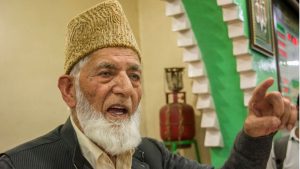
Born in the quiet Bandipora village and raised in the town of Sopore, Syed Ali Shah Geelani emerged as one of the most uncompromising and enduring figures of the Kashmiri resistance movement. His academic journey took him to Oriental College Lahore, where he pursued a passion for languages and literature, eventually becoming the author of at least 34 books. Among his notable contributions was the translation of Allama Iqbal’s Persian works into Urdu, a task that reflected not only his literary depth but also his ideological alignment with Iqbal’s vision of Muslim revival.

For over seven decades, Geelani’s life remained intertwined with the political fate of Jammu and Kashmir. As lifetime chairman of the All Parties Hurriyat Conference (APHC), and previously as a leader of Jamaat-e-Islami and later Tehreek-e-Hurriyat, he carved out a political identity defined by resilience and resistance. His last 11 years were spent under house arrest, suffering from multiple health complications, yet even physical confinement could not dim the symbolic power of his voice. To his supporters, he was not merely a politician but an icon – a living embodiment of the Kashmiri aspiration for self-determination.

In my view, what sets Geelani apart from many others in Kashmir’s tumultuous political landscape is his unwavering ideological clarity. When other Hurriyat leaders began to soften their positions towards New Delhi, Geelani chose defiance over compromise. He broke away and formed Tehreek-e-Hurriyat, insisting that Kashmir must be recognised as a disputed territory, and its fate determined only through a UN-mandated plebiscite. This firmness came at a heavy price – decades in prison, isolation, and relentless surveillance – but also earned him unmatched credibility among large sections of Kashmiri society.

Unlike many leaders who oscillated between rhetoric and accommodation, Geelani was consistent, almost stubborn, in his politics. His pro-Pakistan stance was absolute, rooted in the two-nation theory. To him, Kashmir belonged with Pakistan, although he once admitted that independence was still preferable to what he called “Indian imperialism.” In the eyes of his critics, he was rigid and outdated; in the eyes of his admirers, he was principled, uncompromising, and authentic. Senior Indian journalist Yoginder Sikand described him as perhaps the only Kashmiri leader regarded by many as “honest” and “unparalleled” in symbolising resistance to Indian rule.

What makes Geelani’s story human, however, is not just his politics but also his defiance of mortality. Surviving more than a dozen assassination attempts in two decades, Geelani lived like a marked man, yet refused to retreat. He openly criticised even Pakistan when he felt it betrayed Kashmiri interests, particularly during the Kargil conflict. His rejection of General Pervez Musharraf’s four-point formula further cemented his reputation as the man who would not bend, not even before those he was ideologically aligned with.

For many young Kashmiris, Geelani was compared to Omar Mukhtar, the Libyan freedom fighter who refused to compromise with Italian colonial rule. Like Mukhtar, Geelani came to embody not just resistance, but the moral authority of saying “no” when silence or compromise would have been easier.

Syed Ali Shah Geelani’s legacy is not about victories won or territories liberated – it is about the endurance of a voice that refused to be muted. Whether one agrees with his ideology or not, his life remains a reminder that in a world of shifting allegiances and diluted convictions, there are still men who choose principle over power, defiance over diplomacy, and struggle over surrender.

About the Author:
Mohammad Abdullah, a Kashmiri scholar and commentator, writes from the perspective of a people directly affected by India’s aggressive policies in the region. His areas of interest include hydro-dynamics, underground structures, tunnels and mines, alongside political conflicts and insurgencies.

© 2025 Daily Sada-e-Pakistan. All Rights Reserved.