Xi Jinping’s advocacy of free trade calls China a source of ‘stability and certainty’
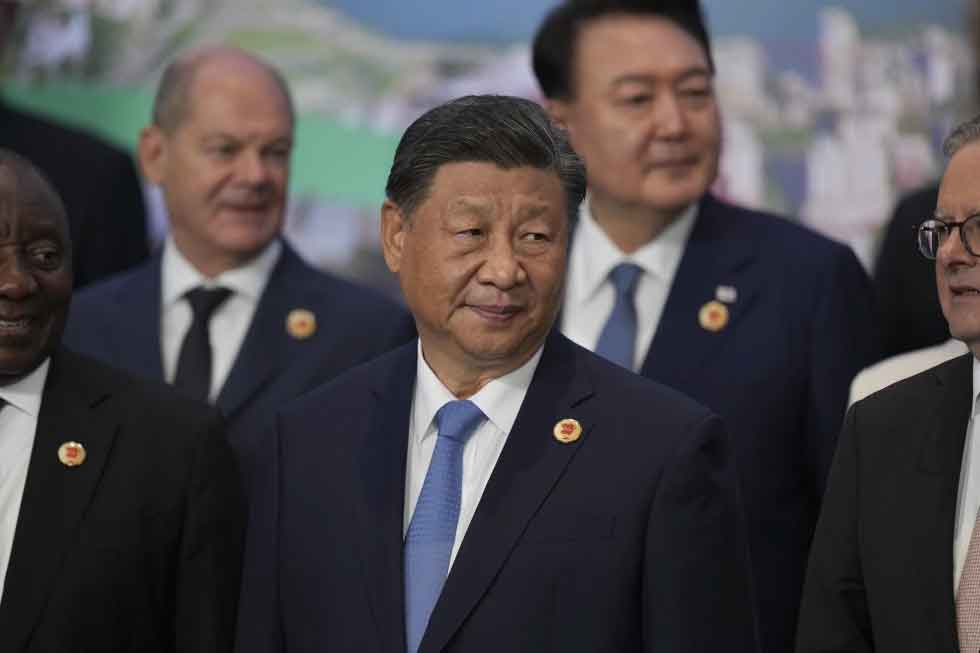
Beijing, April 15, 2025 — Chinese President Xi Jinping has strongly advocated for free trade and open markets globally, calling China a pillar of stability and certainty for the world at a time when the world is facing severe economic and geopolitical uncertainty. Addressing international delegates, business leaders and policymakers, he made clear China’s commitment to multilateralism, economic cooperation and sustainable development.
He stressed that at a time when the world is moving towards protectionism and division, China stands as a predictable and reliable partner.
“China will always be a center of stability”
President Xi Jinping cited China’s steady economic growth, strong industrial base and technological advances as evidence of its reliable status. He warned that the path of economic isolation and unilateral policies will lead the world to stagnation and division.
“China will deepen reform, promote high-level opening-up, and support a comprehensive and rules-based international trading system,” he said.
He added, “In an uncertain world, China provides certainty, and in a divided world, China provides connectivity.”
Xi Jinping described the Belt and Road Initiative as a symbol of international cooperation and mutual benefits, which has promoted infrastructure, trade and cultural exchanges in many regions including Asia, Africa and Europe.
Strong criticism of protectionism
Without naming any country, President Xi criticized the policies of economic nationalism and trade wars. He said that tariffs, restrictions on supply chains and sanctions on specific countries or companies are against global development and justice.
“Protectionism is a dead end. The right path is openness, cooperation and mutual respect among nations. We must prevent the global economy from drifting into camps, blocs or confrontation.”
He urged governments to put aside short-term political gains and embrace mutual cooperation for long-term economic stability.
Supporting reform of global governance
President Xi also called for reform of the global economic system to effectively incorporate the voices and needs of developing countries. He called on global institutions such as the World Trade Organization (WTO), the International Monetary Fund (IMF) and the World Bank to modernize their structures and become more inclusive.
“We must ensure that all countries, especially those from the Global South, have equal representation and participation in global governance,” he said.
Business world and global response
President Xi’s address was met with cautious optimism from global business circles and observers. International CEOs acknowledged China’s economic importance, saying that China is still one of the world’s largest markets and production centers.
Economists said that while issues such as transparency, intellectual property rights and market access still remain, Xi Jinping’s speech indicated that Beijing wants to keep the doors of trade and dialogue open, especially at a time when many countries are pursuing domestic policies.
A vision of shared prosperity
At the end of his speech, Xi Jinping expressed a vision of a shared prosperity based on mutual respect and peaceful coexistence. He stressed the need to prioritize “dialogue over division” and “cooperation over conflict” and appealed to both East and West to rise above competition and work for a better future for humanity.
“No country can tackle global challenges such as climate change, inflation, regional conflicts and health crises alone,” he said. Only through mutual cooperation can we create a future that benefits all of humanity.”
In a world where economies are seeking recovery, Xi Jinping’s message presents China as a partner rather than a competitor—one that not only offers economic opportunities but also promises political predictability and strategic stability.